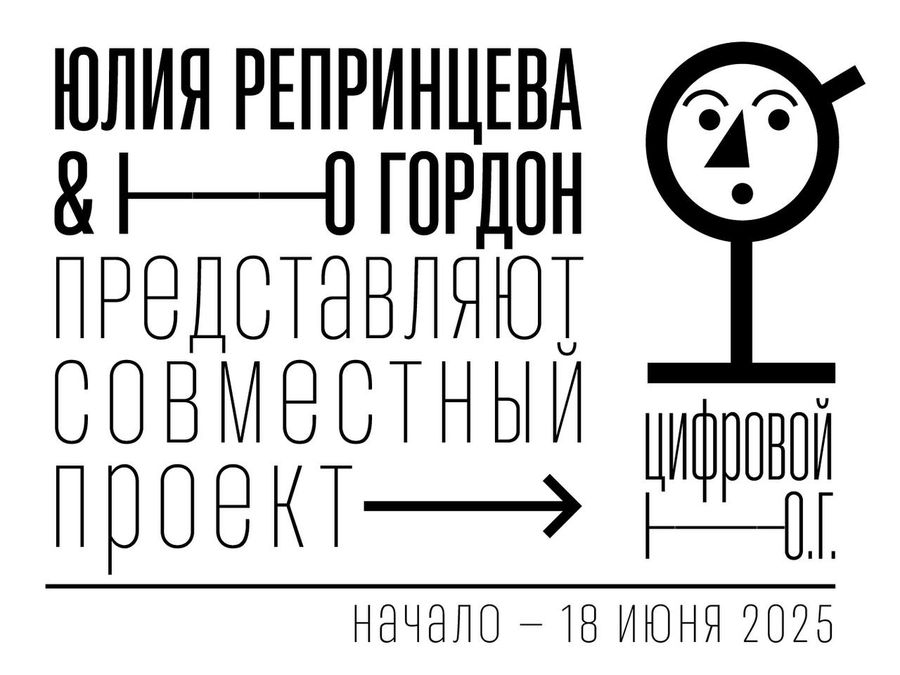
The second half of the texts for quote-hungry Paris we searched for as a trio: yours truly was the client, Julia Reprintseva the prompt engineer, and the treasure hunter — AI in its various forms.post on Telegram ↗

Case study · February 2025 — June 2026
Sixteen months of AI-driven research for artist and type designer Yuri Gordon: two literary maps, a book on the history of Soviet letters, and an infographic. I set the tasks for the neural networks, ran seven systems in parallel and verified every find — while the author wrote.
That many invented quotes with fake references to the French National Library the AI produced when I was looking for texts for the Paris map. It was the first lesson: the tool is powerful, but it cannot be trusted — you need a method. Everything below grew out of that lesson. Open the quote book →
About the project
Four projects, in order. Each tile leads to the project page.
Literary quotations about specific places in Paris, from Hugo and Flaubert to Modigliani and Chanel. This is where AI produced 241 fabricated quotations, and where checking every find began. According to the author, the quotations I found make up about a quarter of the map.
more → 02book · June 2025 — June 2026“Letters of the 20th Century”A history of Soviet lettering. It lives only as chapter-posts on Facebook*. I suggested preserving them and bringing AI into the work, and in June 2025 we launched the “Digital YuG” project: I ran the research with AI, the author wrote chapters from it. That is how ten chapters came about.
more → 03map · September — October 2025“Master and Moscow”The Moscow topography of “The Master and Margarita”, “Theatrical Novel” and Mandelstam’s poems. I checked Ivan Bezdomny’s route against a 1930s map of Moscow and the addresses against the writer’s biography.
more → 04infographic · February 2026“The Catastrophe of the Silver Age”A timeline of 25 poets of the early 20th century: birth, books, emigration, arrests, death. All dates checked against sources.
more →“My partner and neurocaptain”
The story of the project
I turned sixteen months of work into a portfolio case study — in two days and with a single sentence (a caveat: the two days went into assembling it; polishing took another week or two). It is no longer just a landing page but a full-fledged website — the one you are on now. Inside are thirteen research projects, each with its own page: the brief, how the work went, the prompts, the reports as PDFs, the publications. Here you will also find a quote book of 241 cards, a page-flip book, an interactive map, three games and an English version.
From February 2025 to June 2026 I did research for the artist and type designer Yuri Gordon.
Four projects:
A little background. By early 2025 the book had stalled. The last chapter had come out on 21 November 2024, and he opened it himself with the words “after a long break”: chapters had been appearing less and less often — there were two in the whole of 2024. After that, another six months of silence; the author admitted to me that the book was going hard and he had stopped writing. The book existed, and still exists, only as posts on Facebook* — lose access to the account and the book is gone.
I offered to preserve all the chapters and pictures — on one condition: he would carry on with the book. “At least you’ll write a couple more chapters.” In June we launched the AI project, and the book came back to life. Over the next year and a half more than twenty chapters came out — ten times as many as in the whole of 2024. I did the research for ten of them.
Before the project Yuri Gordon was deeply sceptical about neural networks. I spent hours showing them to him — on the phone, on Zoom, sharing my screen. Lectures and workshops for an audience of one. Later he said I had explained everything to him in literally three seconds. That is how AI entered Yuri Gordon’s projects.
The book took up the most space in my case study: Soviet copybooks, typesetting fonts, the lettering of the Moscow metro, shop signs and windows, book covers, monumental propaganda, type designers, the Thaw, the 1957 Festival and the 1980 Olympics. The research for ten chapters is mine.
Seven neural networks took part in the work, often in parallel on the same task: ChatGPT, Perplexity, Gemini, Claude, DeepSeek, Grok and Qwen. In total I handed the author 61 pieces of work.
The ChatGPT project was called “Digital YG”: we were building the author’s digital twin — his thoughts, his voice. A name for my half of the work appeared six months later, in his own chapter: “my partner and neurocaptain Julia Reprintseva”. That is also the title of the book that grew out of all this. More on that below.
There was a lot of material, of many kinds, scattered across seven places: 45 conversations in ChatGPT, 34 documents on Google Drive, 14 PDFs on Yandex Disk, two Telegram channels, 21 Facebook posts and folders on my computer. A single ChatGPT conversation held 71 messages — can you imagine? Rereading all of it, pulling out the dates and the briefs, working out which report belonged to which publication, checking the numbers — that would have taken months.
And while at the start the client was sceptical about AI, his attitude changed as the work went on. Yuri Gordon called the research for the chapter on typefaces “our best performance”. About the metro he noted that what Perplexity found in half an hour would have taken him two weeks. Plus the same again for sorting. About the last research I did for him: the best thing AI had done.
I won’t retell every page. I’ll tell you about the most interesting parts.
Everything in one place. Sixteen months, four projects, seven sources — all structured, attractive and conveniently laid out. No more trying to remember what you did with the last year and a half of your life. Open the link — and voilà, it’s all in front of you. No long, painful hunt for a prompt or for the research it produced. What came out is a real map of the work. (Just as long as HR doesn’t start demanding portfolios like this from everyone. Don’t tell them. Or come to me — I’ll teach you to do the same.)
Every row opens right inside the map: the brief, what was done, with which tools, what came out. If the short version isn’t enough and you want more, the row has its own page.
On the page everything is arranged in layers. At the top is the author’s brief with its date. Below it, what was done and with what. Next comes the brief itself — the actual document the model received, with the full prompt, which you can select and copy. Then the results: the PDF he published on his own pages, and the full texts folded into expandable blocks: click and it opens, don’t need it — close it, nothing to download. At the very bottom are the publications: the author’s posts about this work and my reports, in chronological order, each with a screenshot and a link to the original.
And everything is linked together. From a research project to the chapter written on it. From a chapter to the posts about it. From a report to the publication where the author posted it. From any page to the next: the thirteen research projects can be read in a row, like chapters.
The same material is shown in several ways, and each is a different pleasure. As a page — to study. As a deck of cards — 241 invented quotations, the quote on the front, the fact-check on the back. As a page-flip book — to read straight through. As an English version — to show a client abroad: the whole case study has been translated into English, from every research project to the page-flip book, the map and the games. On top of that, the reports are there as PDFs, exactly as the author received them.
Four projects — four products. The project pages describe each project in detail: the brief, the prompts, the reports. The “Artefacts” section on the main case page holds the things themselves. I came up with them along the way, while I was building the landing page. The quote book, the book, the infographic, the map — all in digital form, and you can do more than open and leaf through them. Each one lets you do something: flip a card, filter the poets, switch the route.
“Oh, Paris!” has a quote book: a deck of 241 cards, a fake quotation on the front and its exposure on the back. “Letters of the 20th Century” has a page-flip book. “The Catastrophe of the Silver Age” has an infographic: 25 poets and their fates before and after 1917 (I made it interactive and in the style of the whole portfolio). And for “The Master and Moscow” I made an interactive map, my own plan of 1930s Moscow. It has three layers: Ivan Bezdomny’s chase after Woland, Bulgakov’s addresses and Mandelstam’s Moscow. The route has a switch: “AI version / After checking”. Press it and you see how the neural network sent Ivan along the Garden Ring and Tverskaya to the Central Telegraph. In the novel he runs through Spiridonovka, the Nikitsky Gates and the Arbat lanes down to the Moscow River. Hover over a point and a quotation from the novel appears. And every map has a link to the original on the author’s page.
AI mistakes are not hidden. In the research for “The Master and Moscow” the neural networks made mistakes. They mixed up the lane where Ivan climbed into the river. They invented nine Mandelstam “quotations” — no such lines exist in any of his texts. And they gave Bulgakov’s line about “gingerbread towers” to Mandelstam. Meanwhile the fact-check, done by the same AI, said of the route: “No errors.” The author spotted the route error himself back then and called the Mandelstam section an AI failure. But the rest — about twenty of them — surfaced only now, when I was building the site and checked everything again. For the site I could have quietly fixed it all. But then it would no longer be the document the author received. So the text stayed as it was, and next to each mistake there is a note and the correct version. You can see both what the AI said and what turned out to be true. To my mind, that is the main thing about working with neural networks: don’t take them at their word.
Nothing is lost. Every document has a date and a link to the original source. The numbers aren’t made up: 245 sources, 111 links, 61 pieces of work, 13 research projects — all counted from the files, and any of them can be checked again.
The prompts are open. Usually people hide their method: “message me and I’ll tell you”. Here the brief is given in full — goal, inputs, quality criteria, output format, checks. Select, copy, run it yourself. You don’t need me for that.
You can see who did what. There is a separate table: the author, me, the AI — stage by stage. Yuri Gordon chose the topics; I set the tasks for the models and checked the sources.
The cherry on top: along the way an idea was born to make an e-book of my own. “Neurocaptain”: a cover, a title page, a table of contents, and it turns pages like a real book. Each spread has the opening of a chapter and the author’s words about the work on the left, and the research sheet on the right: what was asked, what was done, with which tools. Bookmarks, notes, search, three paper modes. And an English version. A case study about work unexpectedly turned out to be a product you can read as well. And that is a god-tier portfolio.
Then I thought: if all of this can be leafed through and flipped, why not play with it? That is how three games appeared in the portfolio. You don’t need to look for them in an app store: open this site on your phone, tap “Add to Home Screen” — and the game sits as an icon next to your other apps. I could have gone further and built an actual app — who knows, maybe I’ll get to that too.
“True or AI?” — you are shown a quotation, an address or a date from any of the projects and have to decide: is it true, or did the neural network make it up? Spoiler: it’s harder than it looks. Some of the fakes are so good I’d print them on posters. “Catch Woland” — Ivan Bezdomny’s chase across Moscow: at every crossroads a line from the novel and a choice of where to turn. Follow the AI version and you end up at the Central Telegraph, where Ivan never was. “The Editor’s Desk” — a neural-network report full of traps; you have to find all the mistakes. That one is closest to my actual job.
And if you can play, you can learn. This site also has a guide, “How to catch AI lying”: ten signs of a fake, each with an example from this project and what to do about it. How to notice that all the authors speak in one voice. How to check a book that may never have existed. And why you must not ask AI to check itself: mine once wrote “No errors” — in a report that had several.
And a brief builder. I put my briefs together using one scheme: goal, inputs, quality criteria, output format, checks. Now anyone can build a brief with it: you fill in the fields, and ready-made text for ChatGPT, Perplexity or Gemini appears on the right — with my checking rules. Press “Copy” and off you go. As an example there is a real brief about the lettering of the Moscow metro.
So a case study about work first became a book, then a game, and then a textbook as well. A portfolio you can play — I haven’t seen one like it anywhere yet.
* Facebook is owned by Meta Platforms Inc., designated an extremist organisation; its activities are banned in the Russian Federation.
In numbers
Counted from project documents: Google Drive, ChatGPT projects, published chapters. The detailed map is below.
Four artefacts
“Oh, Paris!” map · quote book
241 quotes that never existed: Proust, Baudelaire, Tsvetaeva — with dates, “sources” and links to the French National Library. Eight series, cards with a reverse side, a favourites selection.
“Letters of the 20th Century” · research
Ten chapters of the book written on my research — side by side with the research itself, plus the table of contents of the whole book linking to the author’s posts. In Russian.
“Master and Moscow” map · fact-checking
Ivan Bezdomny’s route checked against a 1930s map of Moscow, the addresses against the writer’s biography. Three interactive maps: the AI’s version and what turned out to be true.
Infographic
25 poets on one timeline: 6 emigrated; of the 19 who stayed or returned, 9 died a violent death. Filter by fate, every event on hover.
Games
While I was putting this site together, one more thing came up: a game. There was enough material for a whole season — hundreds of invented quotations, mixed-up addresses, wrong dates. Here are three games. You can play them right on the site or install them on your phone as an app: open the page and tap “Add to Home Screen”.
A quotation, an address or a date from any of the four projects. Decide: is it true, or did the neural network make it up? The card flips to show the answer and the source. At the end — your result: how many times you believed the AI.
How to play: 20 cards, each with two buttons — “True” and “AI”.
Play 02Ivan Bezdomny’s chase from chapter four of “The Master and Margarita”. At every crossroads there is a line from the novel and a choice of where to turn. Follow the AI’s version and you end up at the Central Telegraph, where Ivan never was.
How to play: choose your turn on the map of Moscow until you reach the Moskva river.
Play 03A neural network’s report full of traps: invented quotations, someone else’s lines, mixed-up lanes. Find every mistake — the way I do.
How to play: tap the suspicious places in the text; at the end you see how many mistakes you found and how many you missed.
PlayWhat the results look like
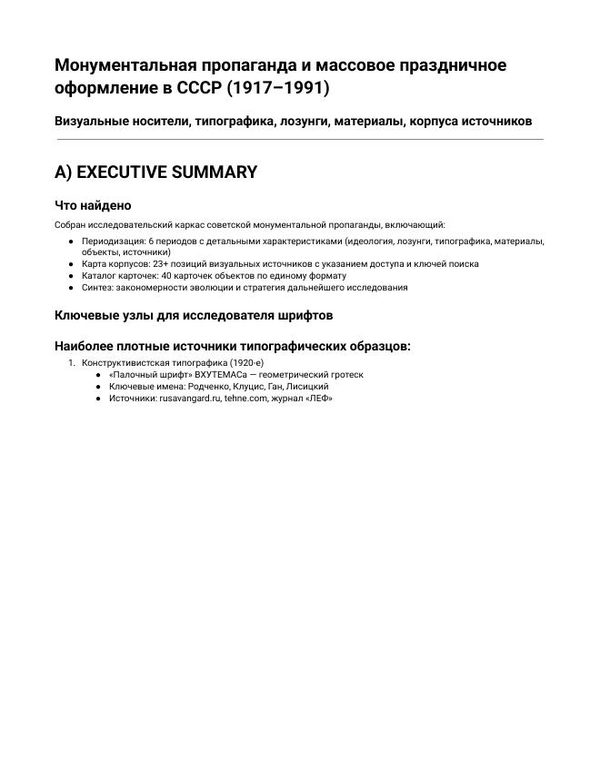
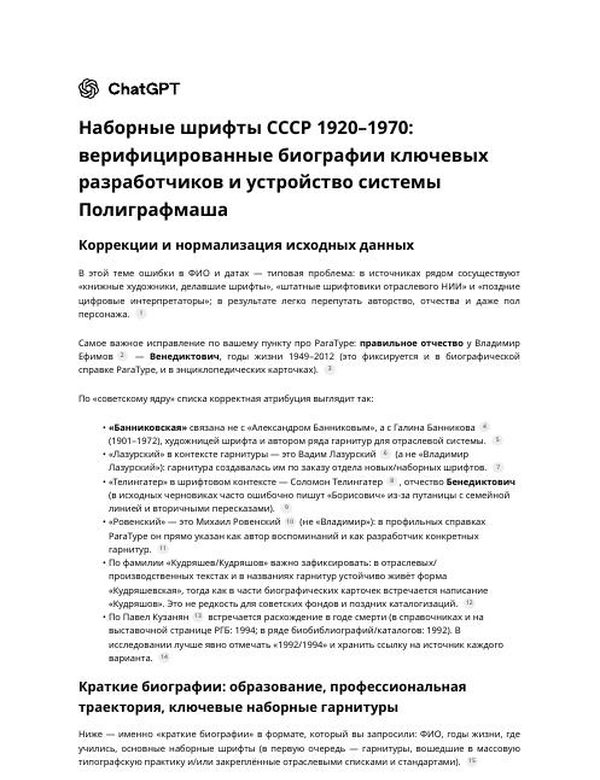
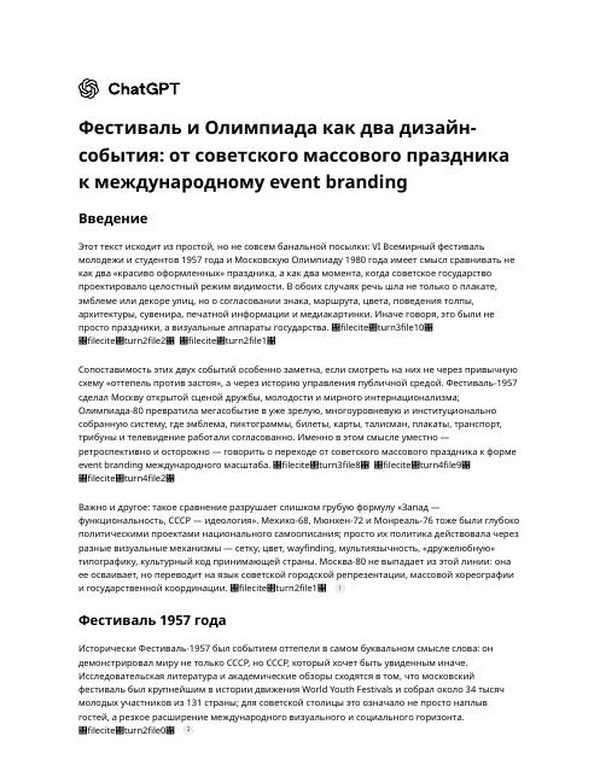
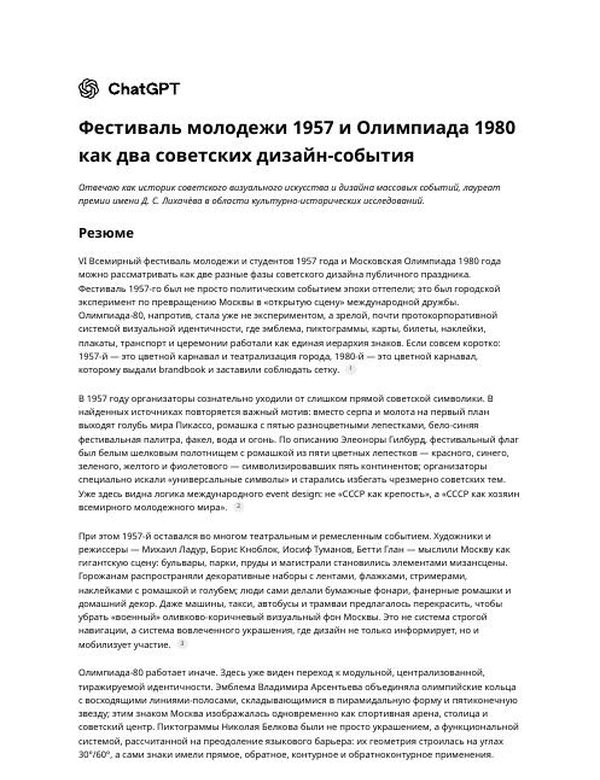
Each runs from 6 to 78 pages: periodisation, catalogues of object cards, comparative tables, sources. Scroll; a click opens the page of that research, where the full report can be read.
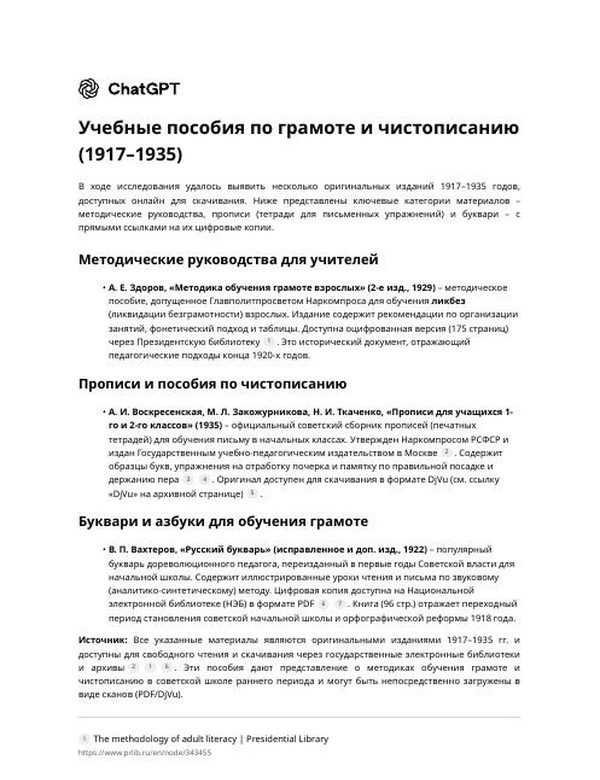
Handwriting primers, 1900–1990Literacy and handwriting textbooks, 1917–1935 (in Russian)
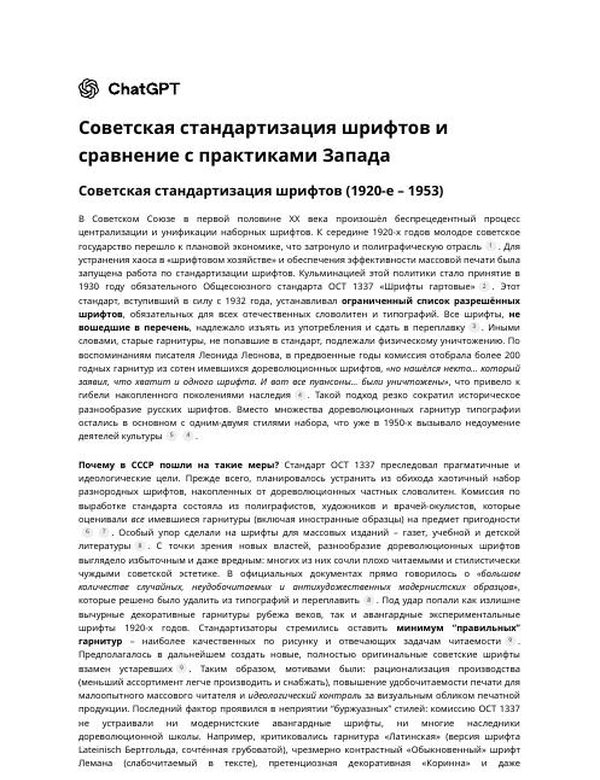
Soviet typefaces of the 1920s–40sSoviet typeface standardisation compared with Western practice (in Russian)
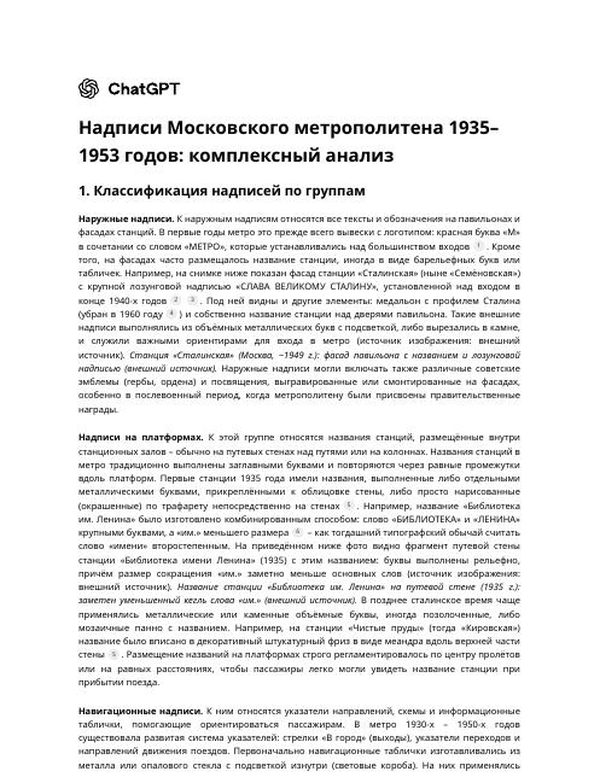
Moscow Metro lettering, 1935–1953Lettering in the Moscow metro, 1935–1953: a comprehensive analysis (in Russian)
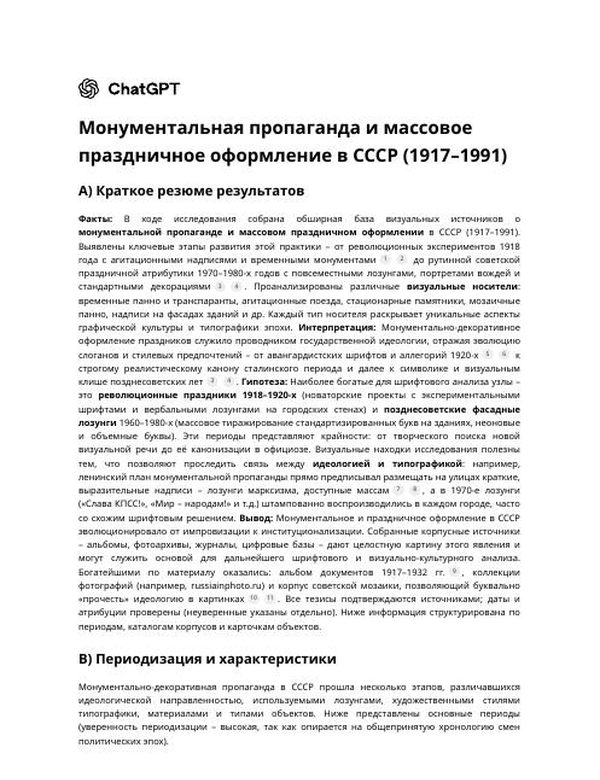
Monumental propaganda, 1917–1991Monumental propaganda and mass festive decoration in the USSR (1917–1991) (in Russian)
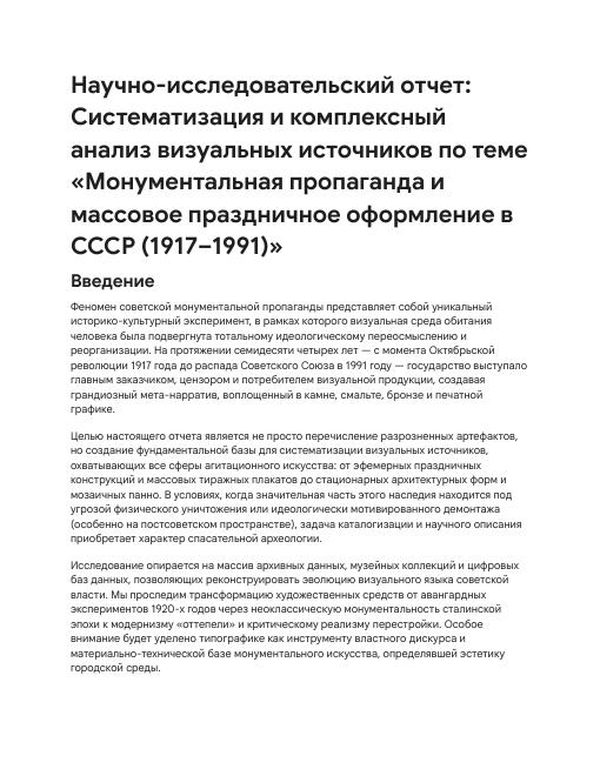
Monumental propaganda, 1917–1991Systematisation and analysis of Soviet visual culture — report on the brief (in Russian)
Monumental propaganda, 1917–1991Monumental propaganda and mass festive decoration in the USSR (1917–1991) — full report (in Russian)
Soviet type designers and the “type plan”Soviet typefaces 1920–1970: verified biographies of the key designers and how the Poligrafmash system worked (in Russian)
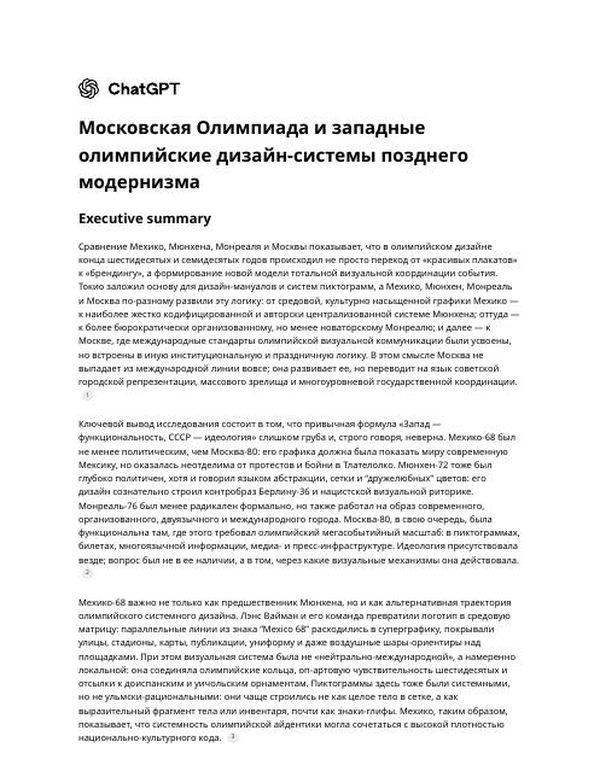
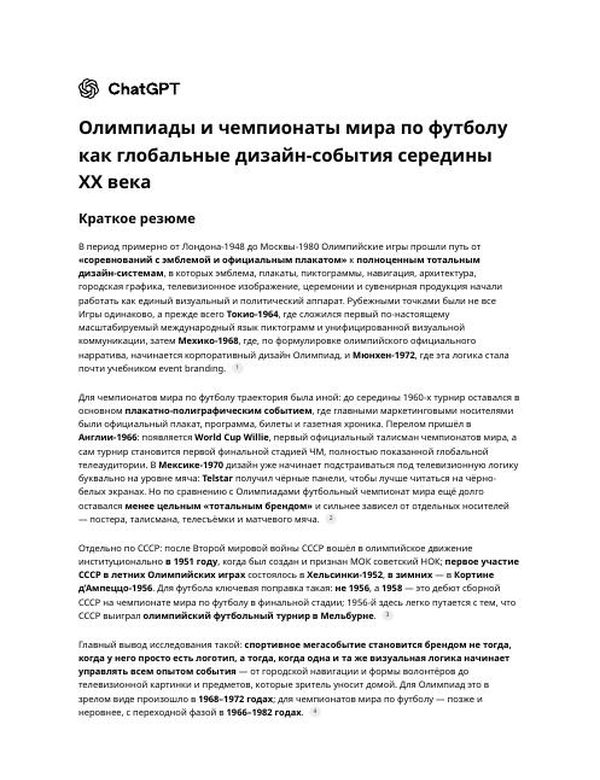
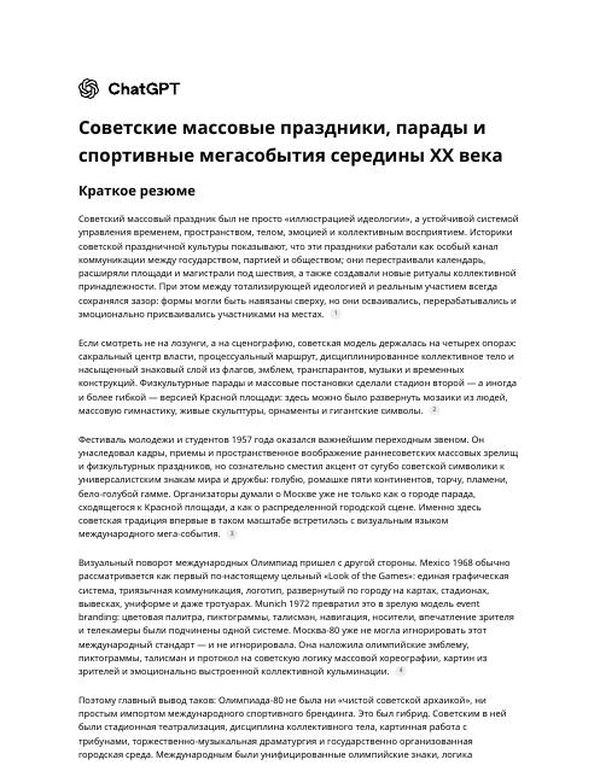
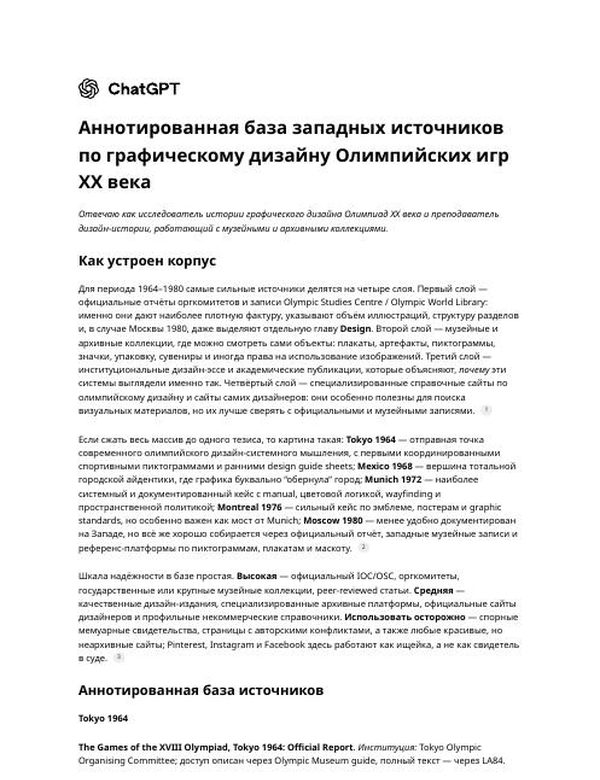
Festival-57 and Olympics-80 — six studiesThe Festival and the Olympics as two design events: from Soviet mass celebration to international event branding (in Russian)
Festival-57 and Olympics-80 — six studiesThe 1957 Youth Festival and the 1980 Olympics as two Soviet design events (in Russian)
Festival-57 and Olympics-80 — six studiesThe Moscow Olympics and Western Olympic design systems of late modernism (in Russian)
Festival-57 and Olympics-80 — six studiesOlympics and football World Cups as global design events of the mid-20th century (in Russian)
Festival-57 and Olympics-80 — six studiesSoviet mass celebrations, parades and sporting mega-events of the mid-20th century (in Russian)
Festival-57 and Olympics-80 — six studiesAn annotated database of Western sources on the graphic design of the 20th-century Olympics (in Russian)Map of work
Every row expands: the brief, what was done, with which tools and what came of it. Each study has its own page with briefs, reports and posts.
From his posts and website
From his Telegram channel, Facebook* and website — as the project went along, from the first map to the last chapter. Every card links to the original (in Russian).

The second half of the texts for quote-hungry Paris we searched for as a trio: yours truly was the client, Julia Reprintseva the prompt engineer, and the treasure hunter — AI in its various forms.post on Telegram ↗
And then artificial intelligence came to the rescue, led by the tamer of neuromonsters Julia Reprintseva. In a matter of days she dug out of thick books exactly the lines we needed — about a quarter of the map.map page on the author’s site ↗
As you remember, my partner Julia and I are building my digital doppelgänger to help write this book.post on Telegram ↗
A link to the AI-assisted study Julia Reprintseva and I did on the subject, which resulted in this article. In my view, our best performance yet.post on Telegram ↗
Head of the neuro-assistants, as always, Julia Reprintseva. Her report on gathering and processing the material is in her Telegram channel.post on Telegram ↗
Perplexity found 111 links. I went through all of them… The AI found, in open access, a rare album of standard window-display samples from 1935.chapter on Facebook* ↗
Yuri Gordon in an interview: “Success with AI depends first of all on knowing how to ask. The prompt itself looked like a full terms-of-reference document for deep research.”interview on Telegram ↗
In parallel with me, the same problem was analysed by ChatGPT under the direction of Julia Reprintseva… Here the AI and I disagreed.post on Telegram ↗
And here is the deep research from ChatGPT on the same topic: Thank you, Julia Reprintseva.post on Telegram ↗
What people come with
All three happened in this project. The solutions are not advice — they are what was actually done for sixteen months.
“I need an overview of a topic, and ChatGPT gives me beautiful fluff: generalities, not a single source.”
The model answers a question it wasn’t asked: it retells what it “knows” instead of searching.
“I can’t tell whether it’s lying. Everything looks convincing.”
Links to pages that don’t exist, quotes nobody wrote, dates “approximately”. A beautiful answer is indistinguishable from a correct one.
“I have forty scanned PDFs and it simply won’t take them.”
Uploads fail silently, limits are documented nowhere, files are “too large” without explanation.
Four stories
For the Paris map DeepSeek produced two quotes for each of ninety places — from Proust to Gainsbourg, with dates and references to the National Library. The same reference recurred for dozens of different authors. Hence the rule: no quote goes to work without checking the text.
“At La Coupole everyone drinks, but only geniuses get drunk” — Hemingway
A week of uploads kept failing without explanation. It turned out the file-volume limit applies not to a project but to the whole account — and shows no error. I found it, described it publicly, worked out a way around it — and the 18-edition base has worked ever since.
Covers 1935–1953: ChatGPT, Perplexity, Gemini, DeepSeek, Grok and Qwen received the same brief. The conclusions were laid side by side. Yuri Gordon could see where the systems rewrite each other, where Gemini gives the best analysis, and where Qwen failed to produce a report at all. Such an experiment is the only way to choose a tool for the task rather than by habit.
The “Art of Type” albums: the first answer looked convincing — with percentages and lists. A second pass through the library’s page scans showed that some contributors were invented and the percentages made up. Third — from the scanned tables of contents. Fourth — a base of 97 names with life dates. The difference between “looks true” and “true” is three extra hours.
Method
The prompt is built from the model’s own requirements (OpenAI and Google documentation), not from pretty phrases. Given such a brief, GPT-5 starts proposing missing checks on its own: “filter out post-Soviet reconstructions”, “give an estimated date with a caveat”. You cannot get that by writing “be careful”.
“Analyse the Moscow Metro inscriptions of 1935–1953. Split them into groups: façades, platforms, wayfinding, memorial…” The rest is my job.
A quick pass in Perplexity: periods, object types, corpora — books, archives, museum databases. Ten minutes after the brief there is a skeleton.
The client states the task in one sentence — I interview them: call, write, ask again. The draft goes into my ChatGPT project built specifically for writing prompts by OpenAI’s documentation: the model asks clarifying questions — what the brief still lacks — and we answer them together with the client on a call or in the chat. The result: the model’s role, scope, research questions, mandatory methodology, a card format with fixed fields, starting sources.
ChatGPT Deep Research for synthesis, Perplexity for links, Gemini for a second view; when the topic deserves it — all seven. One system’s output becomes another’s input.
Scanned tables of contents, library page viewers, book PDFs. A beautiful answer is not a fact: every claim is marked high, medium or low confidence.
Google Docs, PDF, a comparative table of conclusions. The client’s notes are closed the same day. Then a post on what worked and what didn’t.
Monumental propaganda and mass festive decoration in the USSR (1917–1991) — visual media, typography, slogans, materials, bodies of sources.
You are a researcher of Soviet visual culture and an archival analyst. Your goal is to collect, verify and systematise as many visual sources as possible (photos, diagrams, publications, spreads, catalogues), not to retell general knowledge. Work like the author of a scholarly catalogue and a research dossier.
Geography: the USSR (centres + regions + republics). Objects: temporary festive structures; permanent objects (monuments, panels, mosaics, lettering in architecture, light installations); the metro, railway stations, stadiums, houses of culture, research institutes as typical media. Anything where text / letter / slogan is part of the visual composition is relevant.
As many primary sources as possible. Every strong claim with a link. Clearly separate fact / interpretation / hypothesis. No “beautiful generalisations” without support from the sources.
imwerden: “Agitational mass art… 1917–1932” (Агитационно-массовое искусство) · tehne: “Decorative Art of the USSR” (Декоративное искусство СССР) · russiainphoto.ru · sources on mosaics, the metro, the 1918 decree.
Who did what
The first question any client asks about AI-assisted work is “what did the human actually do?”. Here is the answer, stage by stage. Topics always came from Yuri Gordon; the chapters are his text alone — not one of my sentences went into the book. Everything between the topic and the text is my work, with AI as the executor.
About me
Julia ReprintsevaMy role
Not a co-author: the text is the author’s. Not a “prompt operator”: AI here is a tool. In between is the person who turns a topic into a brief, a brief into a process, and the output of that process into verified material you can build on.
Yuri Gordon put it shorter: “neuro-captain”, “head of the neuro-assistants”.
You remain the author of the decision, the text or the product. I take everything between the question and the verified answer: framing the task, the route through the tools, checking and assembling the material. The line of authorship is agreed up front and kept — as it was here.
And if there is nobody to write the text — I am a journalist by first profession and can write it myself, on verified material. Here Yuri Gordon wrote himself because that is how his project was set up, not because it has to be that way.
A similar task?
Tell me what it is about. On a short call we’ll work out what to look for, where, and how long it will take.
Questions
Reconnaissance — one working day: this project has a study where the task arrived at 11:55 and the client had the final PDF at 14:01. A full study — one to two weeks, depending on the size of the corpus and the depth of checking. Support — at the rhythm of your project.
A document answering the questions of the brief; a base or card catalogue with sources and a confidence level for each; a comparative digest if several systems were used; the briefs and prompts themselves. All of it stays with you and can be reused.
The method doesn’t depend on the topic: a market, a regulatory base, competitors, a counterparty check. The corpus of sources and the checking criteria change; the pipeline stays. History and culture are the hardest domain for AI — sources are rare and it lies there most readily. If the method survived Soviet typefaces, it will survive your market.
The right to use the result is yours: the reports, bases and prompts stay in your project and keep working without me. Authorship of the research materials themselves is mine, as with any author of a text or a database; that doesn’t stop you using them, but it means the signature under the work doesn’t disappear. As in this case: the book text is the author’s, the research is mine, and both are visible. The boundaries are agreed up front, in writing.
Whichever fit the task: in this project it was ChatGPT (Deep Research, custom projects), Perplexity, Gemini, Claude, DeepSeek, Grok, Qwen, ChatPDF, Gamma. The list is open — tools change every few months, the method doesn’t. Several systems often run in parallel and are compared on one brief, as in the six-systems story.
Yes, everything is open: thirteen reports and their briefs on the research pages, the quote book of fabrications, the almanac of chapters. Showing the client the whole work is part of the method.
What I do for clients
In days, not months. With a note on what in the report can be trusted fully and what needs an expert’s check.
A quick scaffold of the topic to understand its scale.
The full cycle for one task.
As with the book: a series of studies for the stages of your project.
One more format
Training. I’ll show you how to work with neural networks on your own tasks and examples: one-to-one, over Zoom, with screen sharing — including people who have never opened a neural network and don’t believe it’s any use. And I’ll teach you to gather your own work from chats, drives and social networks into a case like this one.
This works beyond history. Culture and history are the hardest domain for AI: sources are scarce, and that is where it lies most readily. If the method holds up on Soviet typefaces, it will hold up on your market, regulations, competitors or a counterparty check. The topic changes — the pipeline does not.