Maps and infographics · September — October 2025 · research 12
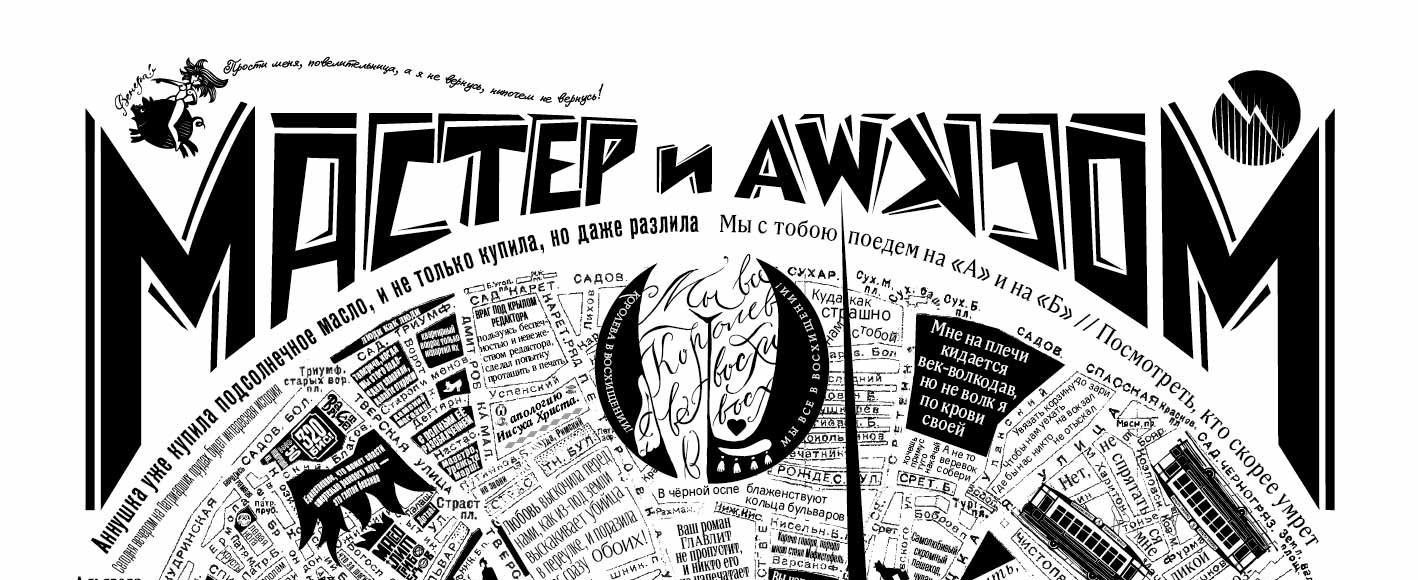
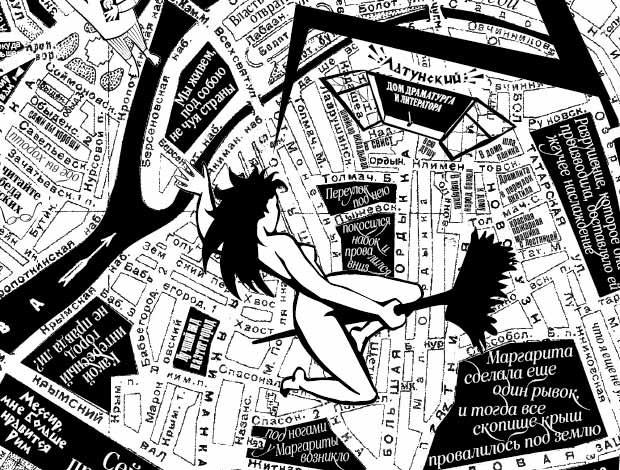
The “Master and Moscow” map: Bulgakov’s and Mandelstam’s topography
Task
Find every quotation involving Moscow topography in “The Master and Margarita” and “Theatrical Novel”, collect Bulgakov’s places from scholarly research, and all of Mandelstam’s Moscow place names; then check the finished research and the theory of “Mandelstam as the prototype of the Master”.
What was done
Three research runs and a separate fact-checking pass: Ivan Bezdomny’s route was checked against a 1930s map of Moscow, the addresses against the writer’s biography; the Mandelstam theory was taken apart source by source. Where AI failed — in Mandelstam’s Moscow place names — was recorded separately.
Tools
ChatGPT, Gemini
Where to look
Below are the briefs the models received, the finished reports in PDF and the documents, as well as the publications made along the way.
Briefs
What exactly the model received
Brief for the place-name research
My document · the text the model received · 8 October 2025
You need to create a prompt for deep research in order to
- Analyse “The Master and Margarita” and “Theatrical Novel”. Find all quotations related to Moscow topography: names of streets, squares, districts; names of places: theatres, restaurants, clubs, churches, newspaper and magazine offices, hospitals, etc.
- Collect data on Bulgakov’s places from the research of Bulgakov scholars. Include places where Bulgakov himself and his characters went.
- Collect all of Mandelstam’s Moscow place names.
Use the information from the attached file
Results
Reports and documents
First collection of the topography
Project document · 7 October 2025
✎ — corrections added on publication (September 2026). The document text itself is unchanged.
Here are the collected materials on the topography of Moscow in the novels of Bulgakov and in Mandelstam, according to literary scholarship. This is an initial sample gathered from key scholarly sources.
Bulgakov’s Moscow topography
Main sources
- B. S. Myagkov, “Bulgakov at the Patriarch’s Ponds” — link
- L. M. Sorokina, “The Sacred Geography of Moscow in the Novel ‘The Master and Margarita’” — link
- M. N. Panchekhina, “Magical Realism in Bulgakov’s Novels” — link
- I. L. Galinskaya, “Yershalaim and Its Surroundings in Bulgakov’s Novel” — cyberleninka.ru
- L. Fialkova, “Moscow in the Works of Bulgakov and Bely” — link
- M. V. Selemeneva, “The Moscow Text and Bulgakov’s Space” — link
Places and addresses in “The Master and Margarita”
| Category | Object / Place | Comment |
|---|---|---|
| Street | Patriarch’s Ponds | Where Berlioz meets Woland |
| Editorial office | Griboyedov House (Prechistenka St.)corrected in later versions: the prototype is Herzen House, Tverskoy Boulevard, 25 | MASSOLIT writers’ house |
| Flat | Bolshaya Sadovaya, 10 (No. 50) | Woland’s “bad flat” |
| Restaurant | Variety Theatre (prototype — the Estrada Theatre) | Performance with Woland |
| Hospital | Stravinsky’s clinic | The Master’s psychiatric hospital |
| Street | Arbat, Garden Ring, Tverskaya | Characters’ movements |
| Cemetery | Novodevichy | Berlioz’s burial |
| Church | St Basil’s Cathedral | Element of sacred contrast |
Places and addresses in “Theatrical Novel”
| Type | Place | Comment |
|---|---|---|
| Theatre | Moscow Art Theatre (MKhAT) | Prototype of the Theatre where Maksudov works |
| Editorial office | Narkompros publishing house | Where the characters start working |
| Street | Tverskaya, Prechistenka, Nikitskaya | Frequent routes |
| Club | Herzen House, House of Journalists | Gatherings of the intelligentsia |
| Hospital | Sklifosovsky, Botkin (possibly allusions) | — |
Bulgakov’s personal addresses
| Address | Comment |
|---|---|
| Bolshaya Sadovaya, 10, flat 50 | Prototype of the “bad flat” |
| Povarskaya St. | Often visited friends there |
| Malaya Nikitskaya, 3 | Address during his most creatively active yearsnot confirmed; dropped in later versions |
| Offices of the newspapers “Nakanune”, “Rabochy”, “Gudok” | Prototypes of the editorial offices in his texts |
Mandelstam: Moscow place names
| Type | Name | Source |
|---|---|---|
| Street | Sretenka, Chistye Prudy, Taganka | Mentioned in letters |
| House | Herzen House | In the context of philosophical culture |
| Club | Writers’ Club, House of Writers | Allusions in the prose |
| District | Zamoskvorechye, Khamovniki | Poetic images (1920s) |
| Image | Moscow as myth | “The Egyptian Stamp”, “The Noise of Time” |
Next step (the model’s suggestion)
- Extract all quotations with place names from both novels
- Build an interactive map with descriptions of the places
- Prepare a printable table with all the coordinates
- Find topography in Bulgakov’s other works
The topography of Moscow in Bulgakov and Mandelstam (Gemini)
Project document · 8 October 2025
I. Introduction: Moscow as a chronotope of literary confrontation
Bulgakov uses topography as a precise anchor for satire and for mystifying Soviet everyday life; Mandelstam uses it to record and preserve personal and cultural memory, resisting the politics of oblivion. Methodology: comparing the locus realis (verified addresses) with the locus poeticus (the artistic image). The challenge is the asymmetry of the data: Bulgakov’s topography is well documented, while Mandelstam’s lacks verified addresses.
II. Cartographic dynamics of the 1920s–1930s
The politics of renaming as an instrument of ideology. Mass replacement of pre-revolutionary names; centralisation through the Mossovet; the chaos of duplicate names; in 1932 the Mossovet and the Architectural Planning Department (APU) tried to bring order to the process. For Bulgakov — a tool for highlighting the absurdity of bureaucracy; for Mandelstam — an act of erasing cultural heritage.
The geography of the literary apparatus. MASSOLIT (Griboyedov House) — the Gorky Literary Institute, Tverskoy Boulevard, 25 (a parody of MAPP and RAPP). The Dramlit House — Lavrushinsky Lane, 17. The literary nomenklatura inhabits a space that once belonged to the bourgeoisie and the nobility.
III. Bulgakov: the topography of prototypes
- Patriarch’s Ponds (Malaya Bronnaya) — the Patriarch’s Sloboda, residences of the clergy — the scene of an atheist debate and of infernal intervention.
- Bolshaya Sadovaya, 10, flat 50 — Bulgakov’s home in 1921–1924, turned into the “bad flat”: in the era of forced flat-sharing, the home lost its function as protection.
- MASSOLIT (Tverskoy, 25) and the Variety (Triumfalnaya Square, 2 — the Satire Theatre) — centres of corrupt art, punished by an explosion and a witches’ sabbath.
- Residences of grandeur: Pashkov House (Vozdvizhenka, 3/5) — Woland’s final flight; Margarita’s mansion — the Foreign Ministry reception house on Spiridonovka, 17 (Shekhtel, interiors by Vrubel). The true “self” of Moscow survives in pre-Soviet buildings.
“Theatrical Novel”: the Independent Theatre — the Moscow Art Theatre, Kamergersky Lane, 3; the closed, stuffy space of the wings versus the chaotic space of “The Master”.
IV. Mandelstam: Moscow as a chronotope of memory
Temporary flats (Nashchokinsky and Furmanny lanes) — the status of an outcast poet. Architectural details (the Kremlin, cathedrals) — anchors of memory, proof that culture cannot be destroyed. Mandelstam’s Moscow is a palimpsest.
V. Comparative toponymy
- Bulgakov’s precision vs Mandelstam’s diffusion: addresses as evidence (Spiridonovka, 17; Lavrushinsky, 17) versus figurative names.
- Satire versus elegy: Bulgakov’s Moscow dies of bureaucracy and is resurrected through fire; Mandelstam’s Moscow resists oblivion.
- Geographic radius: Bulgakov — centres of the elite (Garden Ring, Tverskaya); Mandelstam — forced isolation.
VI. Verified register of place names (“The Master and Margarita”)
| Place name | Prototype / address | Context |
|---|---|---|
| The bad flat (No. 50) | Bolshaya Sadovaya, 10, flat 50 | Woland’s residence; Bulgakov’s home 1921–1924 |
| Patriarch’s Ponds | Malaya Bronnaya / Yermolayevsky Lane | Meeting of Woland, Berlioz and Bezdomny |
| Griboyedov House / MASSOLIT | Tverskoy Boulevard, 25 | Literary Institute; a parody of MAPP and RAPP |
| Variety Theatre | Triumfalnaya Square, 2 | Satire Theatre; the séance of black magic |
| Dramlit House | Lavrushinsky, 17 | Home of the literary elite |
| Pashkov House | Vozdvizhenka, 3/5, bldg 1 | Woland’s final residence |
| Margarita’s mansion | Spiridonovka, 17 | Savva Morozov’s mansion |
| Sparrow Hills | Kosygina St., 28 | Farewell to Moscow |
(The coordinates were left blank in the document — the model did not fill in the latitude/longitude fields.)
VII. Conclusion
Bulgakov’s Moscow is a mystical prototype: precise addresses as a hyperrealistic backdrop for fantastical destruction; salvation is tied to pre-Soviet gems. Mandelstam’s is an epic testimony: a space of memory against the politics of erasure. Both authors created a “Moscow text” as a myth of a city resisting ideological uniformity.
Sources (4)
- mos.ru — the Main Archive Directorate on the renamings of the 1930s · 2. vfokuse.mail.ru — 10 Bulgakov places in Moscow · 3. Kultura.RF — 10 Bulgakov addresses · 4. Toponimika.ru — Moscow place names in “The Master and Margarita”
Fact-checking: what was confirmed and what wasn’t
Project document · 20 October 2025
✎ — corrections added on publication (September 2026). The document text itself is unchanged.
1. Ivan Bezdomny’s route: correspondence to the real topography of Moscow
The research confirms that the scene of Ivan Bezdomny chasing Woland fully corresponds to the real topography of Moscow in the 1930s.
The route in the text
- Patriarch’s Ponds — Ivan is sitting on a bench with Berlioz when Woland appears.
- Bolshoy Patriarshy Lane — Woland, Koroviev and Behemoth disappear into the lane.
- Spiridonovka — the characters run out to the Nikitsky Gates.
- A bus to Arbat Square — Koroviev jumps onto a bus.
- Behemoth on the “A” tram — the cat jumps onto the footboard of the “Annushka”.
- Arbat, Prechistenka (Kropotkinskaya St.), Ostozhenka — Ivan runs through courtyards and loses the trail.
- Pozharsky Lane — he bursts into a stranger’s communal flat (probable prototype — No. 12, flat 66).the lane is not named in the novel: it is a prototype found by local historians, not a place name from the text
- Prechistenskaya Embankment / the Moskva River — Ivan jumps into the river.
Confirmation from sources
- The route has been reconstructed by Bulgakov scholars and local historians (map by Valeri Leonov: leonovvaleri.livejournal.com/26549.html).the route details — Pozharsky Lane 12, flat 66, the stairs to the water, the Babiy Gorodok dam — come from a different post: in-moskow.livejournal.com/3098 “The Chase after Woland”
- All the streets and points correspond to places that existed.
- The spot where he jumps into the river is the Prechistenskaya Embankment opposite Savvinsky Lanecorrect: opposite Pozharsky (then Savelyevsky) Lane; in the 1930s there was a double staircase down to the water there, and Bulgakov himself swam at this spot.
Conclusion: the route fully corresponds to historical Moscow. No errors.the report itself did contain errors — see the notes above
2. Bulgakov and Moscow: how the place names match the writer’s biography
Where Bulgakov lived (in fact and in the novel)
- Bolshaya Sadovaya, No. 10, flat 50 — lived there in 1921–1924; encoded as building No. 302-bis, flat 50 — the “bad flat”. Now a museum. Confirmed 100%.
- Nashchokinsky Lane, No. 3/5, flat 6 — last place of residence, with Yelena Shilovskaya (1936–1940).correct: from 1934 — the report itself names 1934 below Confirmed by archives and by Yelena Bulgakova’s memoirs.
- Mansurovsky Lane, No. 9 (at his friend Yermolinsky’s) — prototype of the Master’s basement flat: a quiet courtyard, a stove, lilac. Confirmed by local historians and by letters.
- Povarskaya Street — prototype of “Griboyedov House”, probably Povarskaya 52 (the Central House of Writers). Cited by Myagkov and Selemeneva.
Prototypes of locations: friends’ addresses
- Pozharsky Lane, No. 12, flat 66 — where Ivan Bezdomny bursts in; the house of Bulgakov’s acquaintances.
- Sivtsev Vrazhek, No. 26 — the Kreshkov family house; characters of “Theatrical Novel” were modelled on its residents (monograph by N. Katayeva).
- Merzlyakovsky and Filippovsky lanes, the Arbat courtyards — walks in drafts and essays.
Conclusion
The research accurately identifies the real addresses behind the prototypes. “Griboyedov House” → Herzen House / House of Writers; “Stravinsky’s clinic” → Krasnushkin’s clinic in the Sokol area; “the Variety” → the theatre in the Aquarium garden or the Estrada Theatre on Sadovaya. No errors found; the prototype of the Master’s basement was pinned down — Mansurovsky 9.
3. Is Osip Mandelstam the prototype of the Master?
What scholars say
- Most Bulgakov scholars (Chudakova, Myagkov, Lebedev): the basis of the Master is Bulgakov himself (a rejected writer; burns his manuscript; the basement; autobiographical intonations).
- Some scholars point to similarities with Mandelstam. Boris Gasparov: “the image of the Master in many ways recalls Mandelstam’s fate”not a quotation: Boris Gasparov has no direct “Master = Mandelstam” formula; he analyses Mandelstam motifs in the novel — “Iz nablyudeniy nad motivnoy strukturoy romana M. A. Bulgakova ‘Master i Margarita’”, Slavica Hierosolymitana III, 1978 — arrest and exile; mental breakdown (Mandelstam jumped from a hospital window during his exile in Voronezhcorrect: in Cherdyn, 1934); the role of the wife (Nadezhda Mandelstam — like Margarita); the feeling of being a “cast-out poet”.
- Coincidences of fate: Bulgakov and Mandelstam lived in the same building in 1934 — Nashchokinsky Lane, 3/5; Bulgakov witnessed the arrestnot confirmed by sources; Bulgakov’s wife helped Nadezhda Mandelstam financially; the figure of the Master appears in the drafts soon after these events.
What Bulgakov’s texts say
There are no direct allusions to Mandelstam in the novel. The Master’s name is never given — a pointer to a self-portrait. Bulgakov signed himself “M. Neznakomets” (“M. Stranger”).
Conclusion
There is no direct evidence. The biographical overlap makes an influence possible, if partial. Echoes of Mandelstam’s fate in the Master — but not a full prototype.
4. Moscow place names in Osip Mandelstam’s poetry
List 1: direct references
| Quotation | Work / year | Comment |
|---|---|---|
| “And the riotous grain trade on the Sukharevka” | “All is alien to us in the obscene capital…” (1918) | Sukharevka — a market |
| “And the terrible sight of the brigand Kremlin” | Same | Kremlin |
| “…the foul-mouthed water of the Moskva River flooded the learned Kropotkinskaya Embankment”exact quotation: “…the foul-mouthed waters of the Moskva River will flood the learned Kropotkinskaya Embankment” | “Fourth Prose” (1930) | now Prechistenskaya Emb. |
| “you and I will ride the ‘A’ and the ‘B’” | “No, I can’t hide…” (1931) | tram lines: the “Annushka” and the “Bukashka” |
| “at Chistye Prudy”not found in Mandelstam | Letters to Pasternak and to his wife | — |
| “in the backwater of Zamoskvorechye, among the ruins of bathhouses”not found in “The Egyptian Stamp” | “The Egyptian Stamp” (1928) | Zamoskvorechye |
| “A woman from Khamovniki, timid”not found — probably invented by the AI | poems of the 1920s | Khamovniki |
| “I’m at the Metropol, and you’re on the Arbat”not found — probably invented by the AI | correspondence | Hotel Metropol |
| “by the Lubyanka a street lamp burned out”not found — probably invented by the AI | drafts | Lubyanka |
Conclusion: about 10–12 direct mentions.
List 2: implicit, figurative references
| Quotation | Work / year | Comment |
|---|---|---|
| “hills dull-and-not-dull, like halva” | “Where the bathing huts are, the cotton mills…” (1929) | a pun on Neskuchny Garden (“not-dull”) |
| “Sister Klyazma’s eyelash has curled, and so on the Yauza a duck swims” | Same | the Klyazma and the Yauza |
| “…to Moscow University and back”not found — probably invented by the AI | 1930s | Moscow University |
| “boulevards like propylaea, like empty halls”not found in “The Noise of Time” | “The Noise of Time” (1923) | Moscow boulevards |
| “The skyline — without towers”not found — probably invented by the AI | 1931 | the disappearance of monastery towers |
| “gingerbread towers”this is Bulgakov, not Mandelstam: “the gingerbread towers of the Maiden’s Convent”, The Master and Margarita, ch. 32 | drafts | Novodevichy Convent |
| “let’s ride, as always, around the ring”not found — probably invented by the AI | essays/letters | the ring tram |
(It was this section that Gordon judged a “complete failure” — some of the quotations are not confirmed by the corpus of Mandelstam’s texts. An example of openly recording the limits of AI research: the result went through the author’s verification, and the errors were exposed.)