The book “Letters of the 20th Century” · July — August 2025 · research 02
Soviet metal typefaces of the 1920s–40s: turning a meadow into a potato field
Task
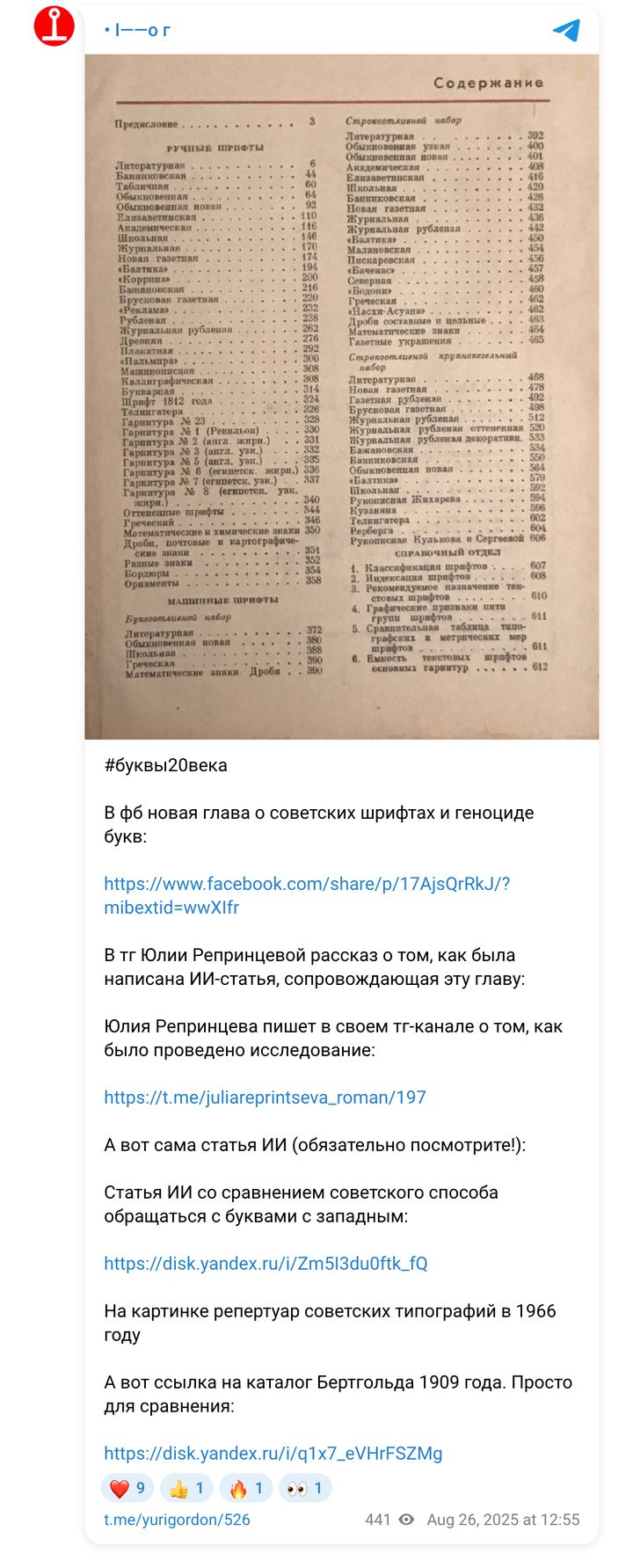
Find publications on typefaces, compile catalogues by decade, find out which typefaces were used most often, and locate the state measures that selected them — a list of what was kept and what was discarded.
What was done
Perplexity gathered sources; from them, a brief for Deep Research was built in my prompt-writing project; ChatGPT compared type standardisation in the USSR, the USA, Britain, France and Germany up to 1953. Found the OST 1337 and GOST 3489 standards and Bormann’s 1941 circular banning Fraktur.
Tools
Perplexity, ChatGPT Deep Research (o3)
Where to look
Below are the briefs the models received, the finished reports in PDF and documents, and the publications made along the way.
Briefs
What exactly the model received
Brief for Deep Research: a survey of Soviet typefaces, 1920–1940
My document · the text the model received · 1 August 2025
Task for Deep Research: A survey of typefaces in the USSR in the 1920s–1940s (task structured after the Sample Terms of Reference )
Research goal: Find and systematise all typefaces used in the USSR between 1920 and 1940, with a detailed description of their names, styles and areas of use. At the same time, collect information on all regulatory documents (GOSTs, OSTs, etc.) that governed their use.
Geographic scope: USSR.
Research focus
- List of typefaces:
- The name of each typeface.
- Year of design or of coming into wide use.
- Type (antiqua, Egyptian, poster, etc.) and key distinguishing features.
- Main areas of use (book printing, newspapers, children’s literature, agitation, etc.).
- Regulatory documents:
- A list of standards (GOST 3489-46, GOST 3489-57, OST 1337, etc.) with number and year of adoption.
- A short annotation of each document: which groups of typefaces it covered and what requirements it set.
- The historical context in which standardisation appeared and its aims.
- Chronological structure:
- 1920s: the favourites of the post-revolutionary period.
- 1930s: unification and the first mandatory standards.
- Late 1930s — early 1940s: key innovations (Literaturnaya, Obyknovennaya Novaya).
- 1940s: poster and playbill typefaces.
- Methods and sources:
- Analysis of printed catalogues, specimen albums, monographs and printing-trade journals.
- Study of archival copies of GOSTs and OSTs, and of instructions from Poligrafmash and the Research Institute of Printing Machinery.
Expected results
- A table or structured list of all typefaces with their descriptions and dates.
- A list with short annotations of the regulatory documents, citing sources (archives, collections).
- A chronological summary by decade with the key stages in the development of typefaces and standardisation.
- A list of sources used (archival collections, printed publications).
Please complete the task following the structure and research areas specified.
Results
Reports and documents
Publications
Posts about this research
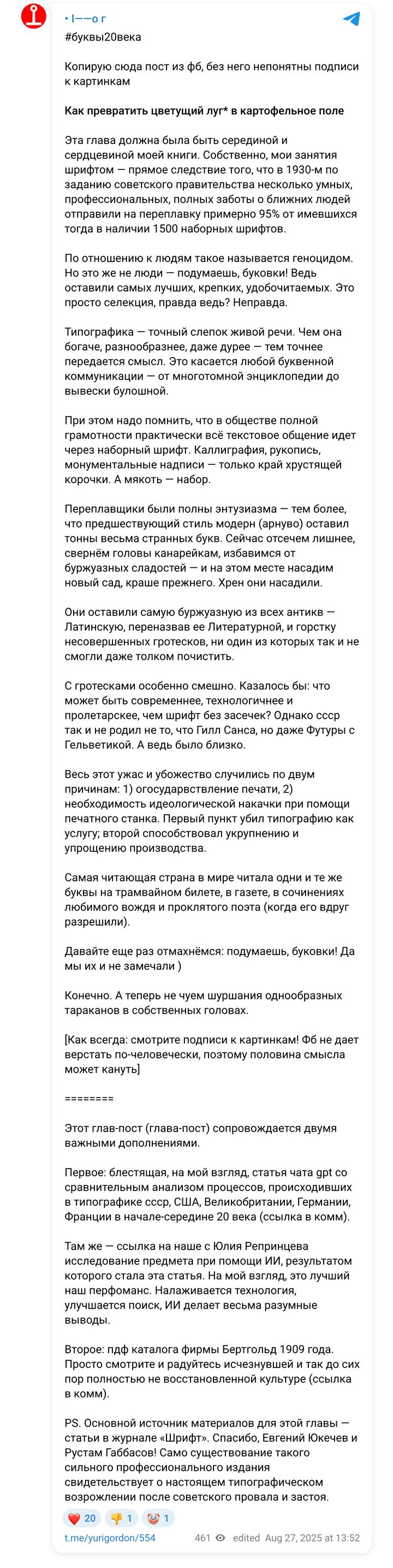
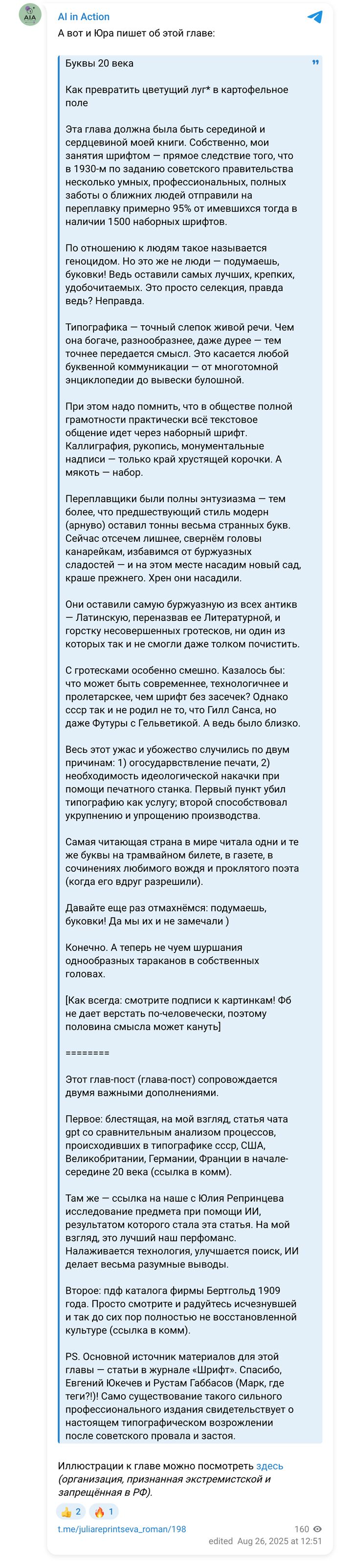
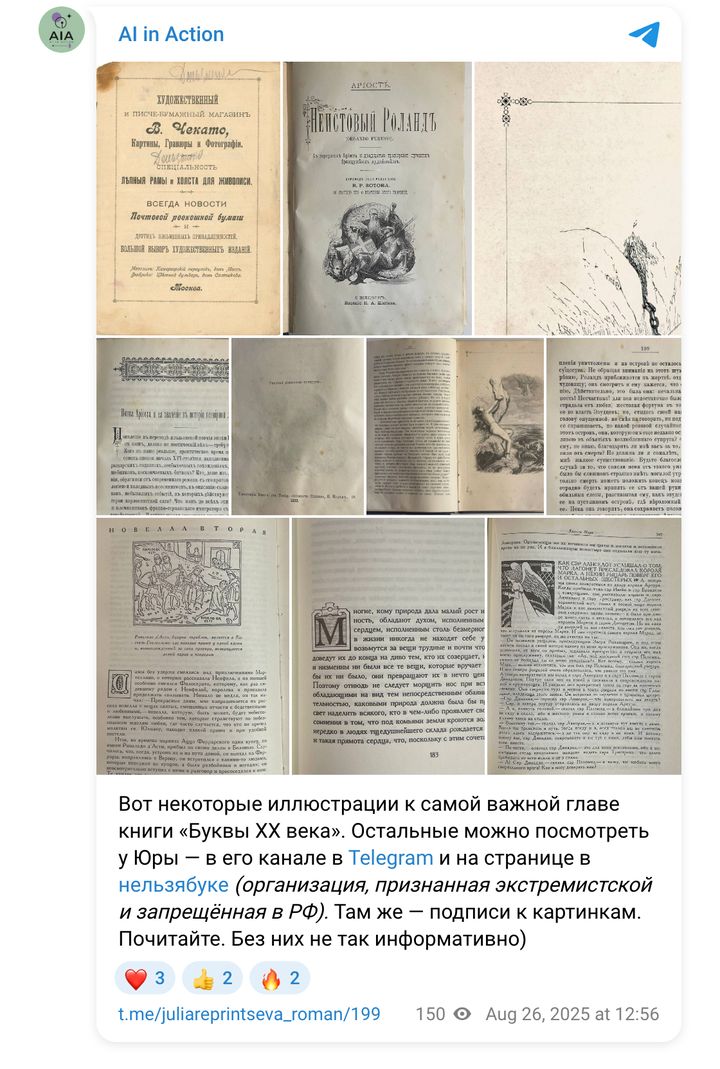
Yuri Gordon and I — about this work in our own channels (in Russian). Each post links to the original.